Portfolio · 2026 Edition

I design the surface.I build the systemunderneath.

I'm Rahul - a senior product designer
working at the intersection of B2B SaaS, design systems, and AI workspaces - five years of shipping the surface and the substrate underneath it.

22→3·

Onboarding clicks reduced (Bullpen V2)

$250/mo

Per-user external cost eliminated

50+·

Engineering team shipped against my handoff

85·

System Usability Score (Bullpen V1 test)

Now
Pune, IndiaGMT +5:30
Available July 2026Senior IC roles
Building Nova v1.2Tokens · components
Tycho · AwakeDeep-work loop
Tokens before pixelsRole-aware complexityReversibility over efficiencyComponents own their statesDocumentation is the deliverableTrace every decisionRestraint scalesTokens before pixelsRole-aware complexityReversibility over efficiencyComponents own their statesDocumentation is the deliverableTrace every decisionRestraint scales

Selected work · 5 chaptered case studies

5 problems. 5 systems behind them.

Each case below pairs a high-stakes product problem with the underlying system that made the answer reusable. Tap any tile to read the full story — six chapters, point A to point B, the principles I held, and the metrics they moved.

InsightBuildReflection
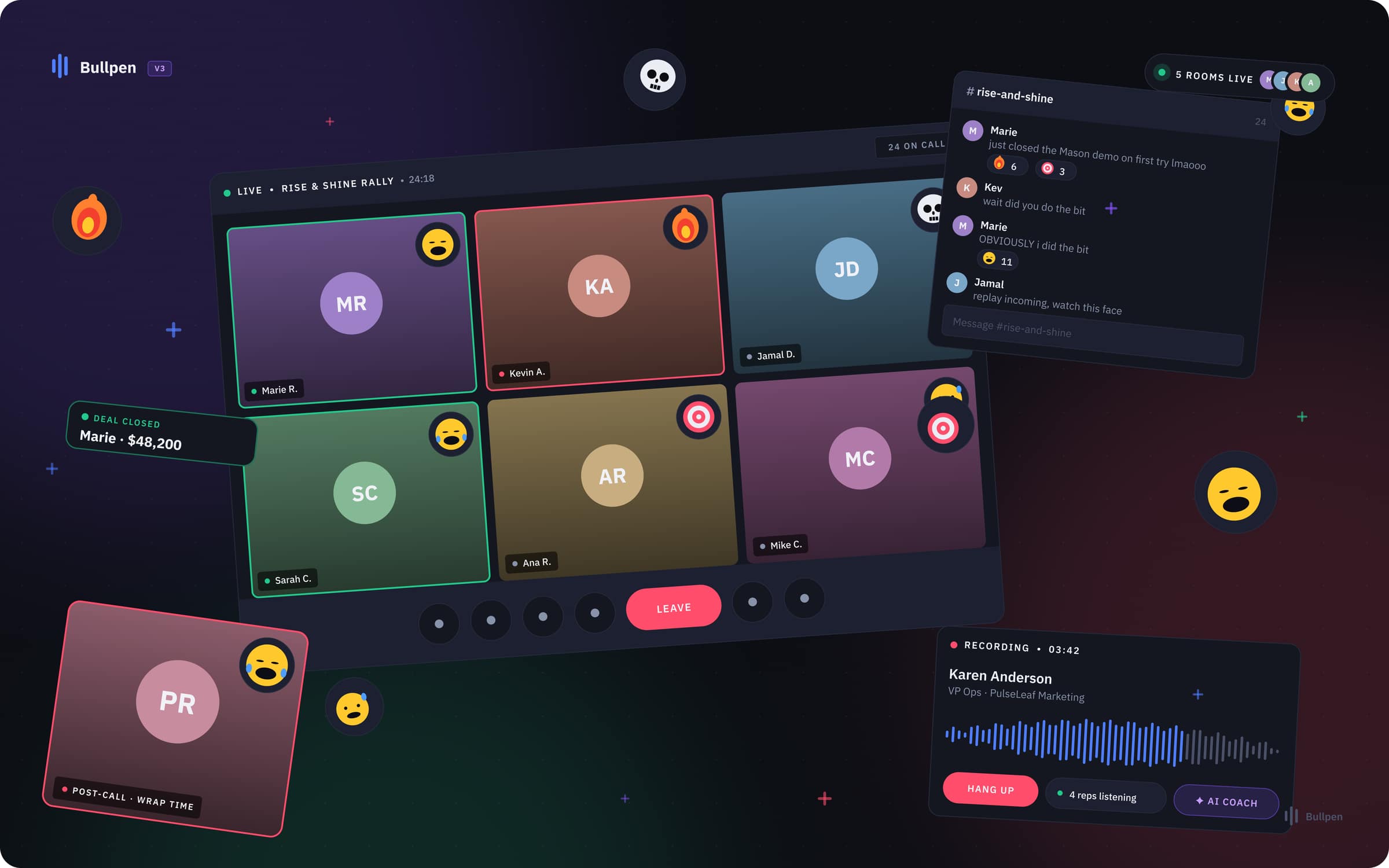
Bullpen — Bullpen V3 — calling screen, modern dark theme, persistent DM widget visible
012022
01WebEnd-to-end design

Bullpen.

From a shipped zero-to-one product (V2, Coditas) to a 2026 conceptual architectural refresh (V3) — independent post-Coditas work.

I designed the native V2 that slashed a 22-click onboarding flow down to 3. In 2026, I evolved the architecture into V3—a modern, productized concept.

  • Discover
  • MVP Testing
  • Affinity Mapping
  • V2 Ship

Point A

A fragmented workflow relying on a $250/mo external tool (CallBlitz) with a painful 22-click onboarding process.

Point B

A fully native, seamlessly integrated collaborative space, conceptually evolved in 2026 for a modern, high-performance aesthetic.
Read the story
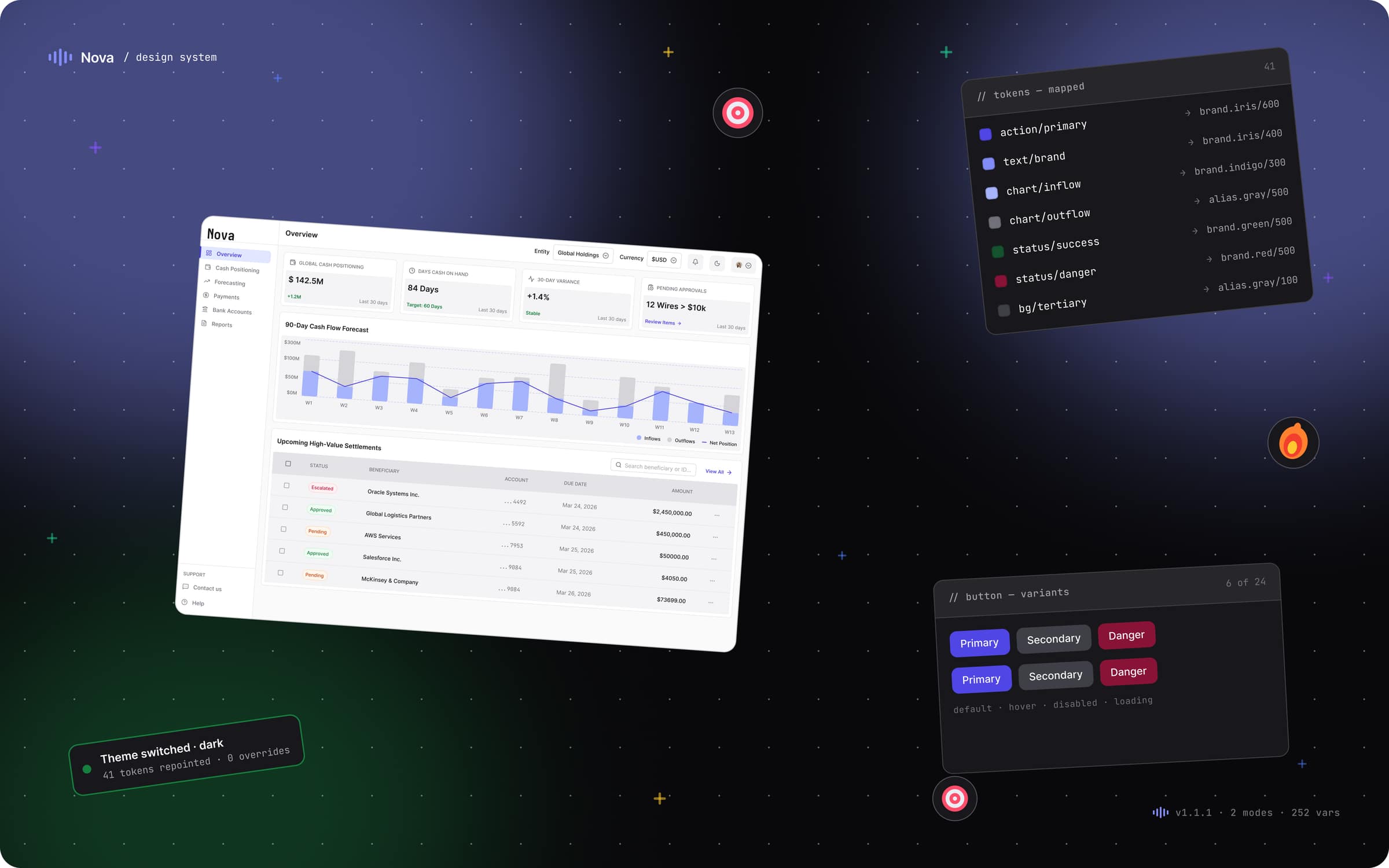
Nova — Nova — Cashflow Treasury dashboard, light + dark side-by-side. Built for a modern, high-density 2026 aesthetic.
022026
02Web2 weeks

Nova.

A token-driven design system for an enterprise treasury dashboard.

A scalable design architecture that bridged the gap between Figma and code. 231 tokens, 47 components, and a foundation a six-engineer team can ship against without me in the room.

  • Audit
  • System
  • Tokens
  • Frontend

Point A

A fragmented UI where every screen was built from scratch, causing endless design debt and engineering bottlenecks.

Point B

A 100% tokenized, 4-collection semantic graph that translates directly into production CSS, making future development frictionless.

Read the story
Selected concepts · 2026 — independent post-Coditas work
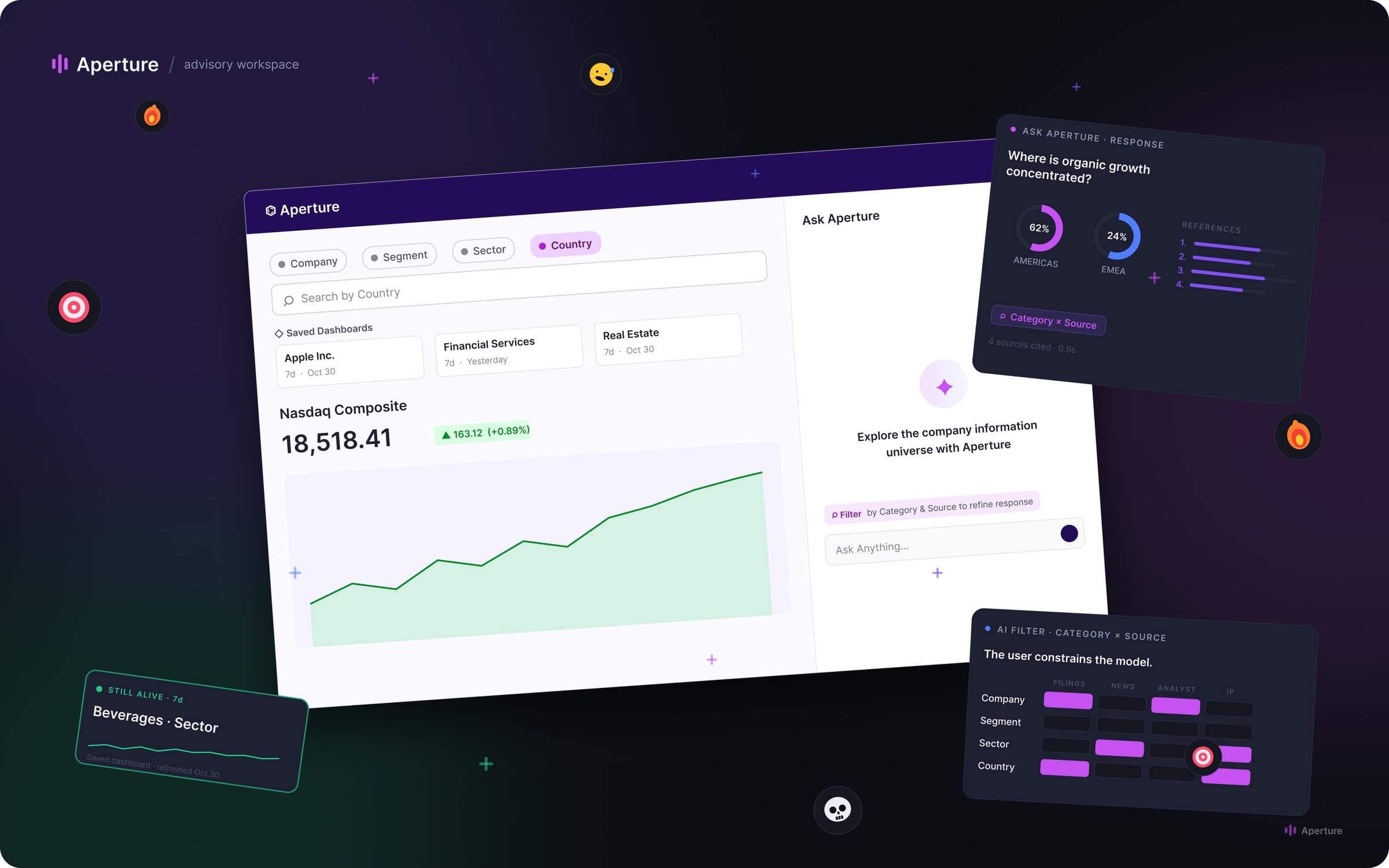
Aperture — Aperture — the AI workspace I owned on a 3-designer team. The dashboard at the centre was a teammate’s; the AI second-chair and faceted filter (right) are my slice.
032024
03Web2 weeks

Aperture.

The AI workspace inside an advisory product — Ask Aperture, threads, structured responses, faceted filters. The slice I owned on a 3-designer team.

Threads as the unit. Documents not chat. A faceted filter that constrains the model. The AI slice of an advisory product, shipped in 2 weeks.

  • Founder Brief
  • AI Interaction Design
  • Faceted Filtering
  • Eng Handoff

Point A

Three designers, a 2-week sprint, and a founder-defined product. The dashboard had a teammate; the AI surface didn’t have a designer yet.

Point B

An AI workspace where the unit is the thread, the response is a document not a chat bubble, and a faceted filter (Category × Source) constrains the model before every prompt.

Read the story
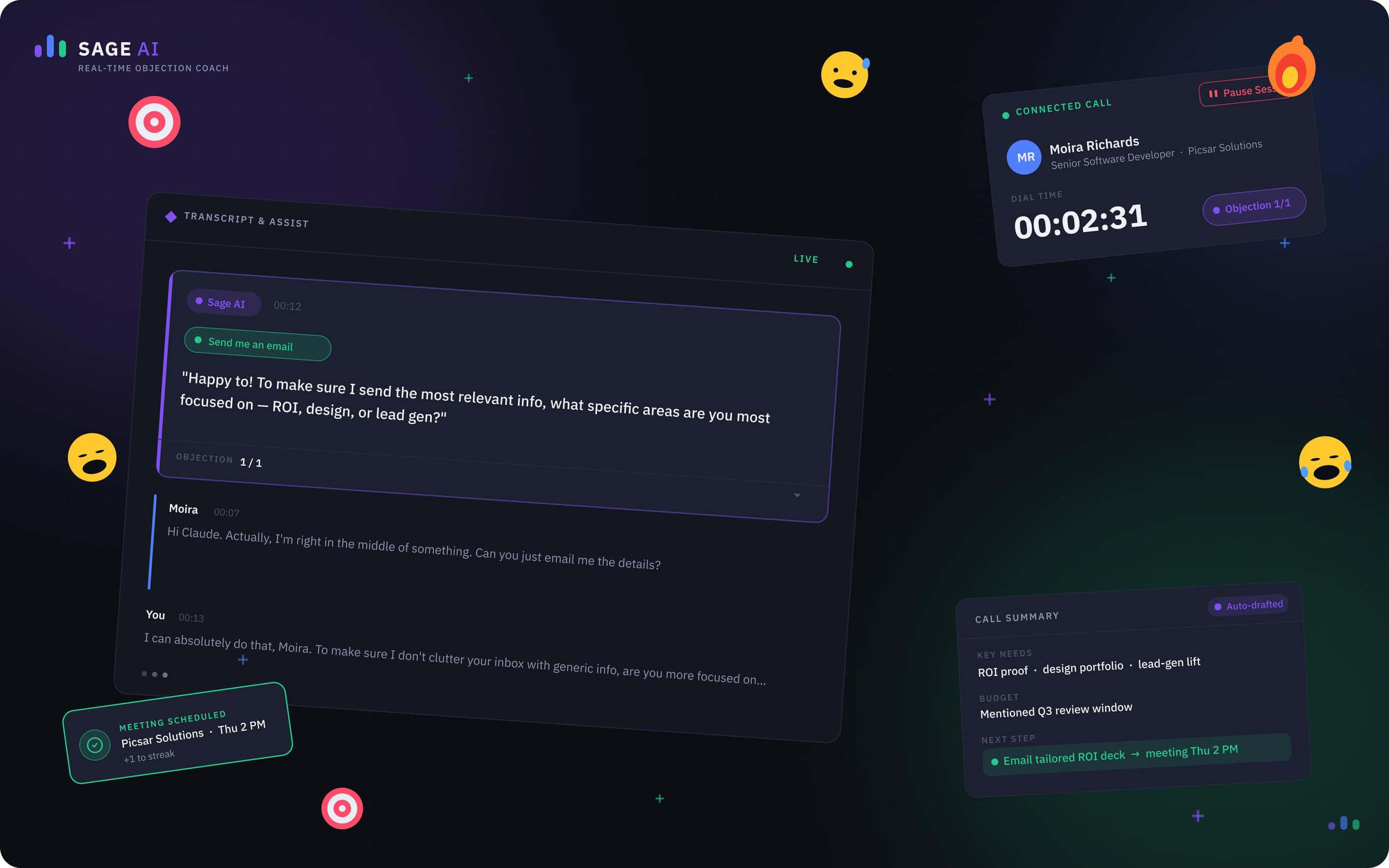
Sage AI — Sage AI / Salesync V2 — live workspace, dark-first, AI suggestion mid-call
042025
04Web10 weeks

Sage AI.

An AI layer for an existing sales dialer — designed around the rep, not the model. V1 shipped at Coditas; V2 is independent 2026 concept work post-Coditas.

The PRD asked for three things: live transcription, in-call objection handling, and a one-click call summary. The design problem was making all three feel like one quiet system inside a dialer reps already lived in.

  • PRD → Wireframes
  • Pattern Hunt
  • Interaction Design
  • System & Tokens

Point A

A working dialer with a rough V1 AI panel that surfaced everything at once and asked the rep to triage in the middle of a sales call.

Point B

A 2026 dark-first workspace where transcription, objection handling, and call wrap-up each have a job, a moment, and a spot — and never compete for the rep's attention at the same time.

Read the story
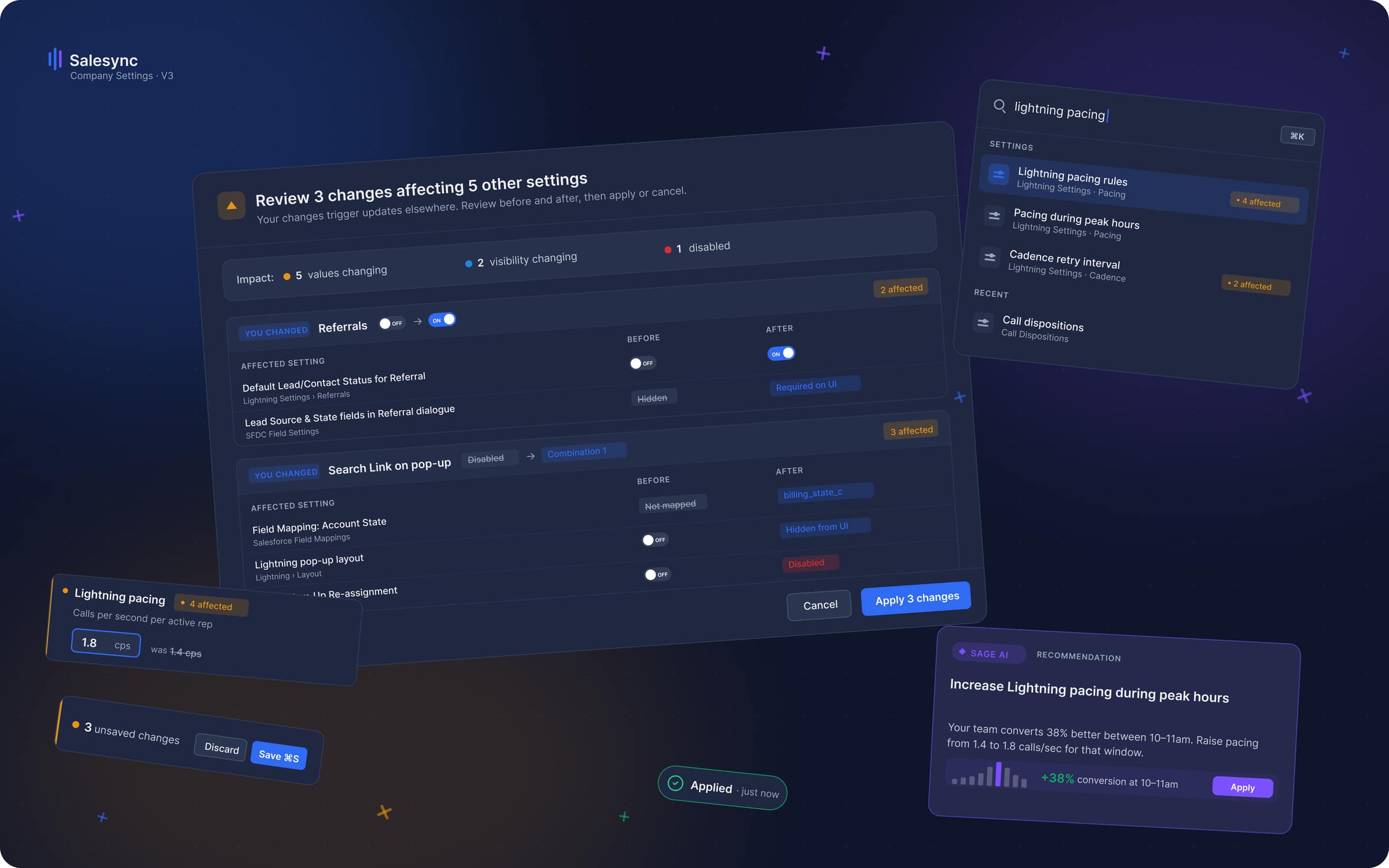
Salesync Settings — Salesync V3 — hub overview with SAGE AI recommendations panel
052026
05Web8 weeks

Salesync Settings.

How I turned a 30-block legacy scroll — where one click could rewrite a customer contract — into an admin hub people actually trust. Independent 2026 concept work post-Coditas.

142 settings → 8 task-based categories. ⌘K targeting in under 2s. WCAG 2.2 AA across every surface. Zero silent contract breakages.

  • Audit
  • Information Architecture
  • Interaction Design
  • Accessibility

Point A

A 30-block vertical scroll. No search. Implicit saves. Deprecated toggles next to load-bearing ones. One misclick could silently rewrite a signed customer contract.

Point B

A hub-and-spoke admin console. ⌘K targeting in under 2 seconds. Dependency-review modals before every cascading save. WCAG 2.2 AA across every token pair. Built to survive the next decade of accretion.

Read the story

Process · How I work

Six commitments — held across every project.

These aren't aspirations. They're the rules that make my work defensible to a hiring panel, a six-engineer team, and the customer who has to live with the result.

P01

Tokens before pixels.

No raw hex on a canvas. Every color, spacing unit, radius, and elevation traces to a named decision. The design file becomes a contract — not a swatchbook.

P02

Role-aware complexity.

Same product, different user — different UI. Admin and rep, manager and IC. The system holds consistency; the surface respects the gap.

P03

Reversibility over efficiency.

When stakes are high, click-count is the wrong metric. Persistent safety nets, dependency previews, and undo paths beat a leaner happy path.

P04

Components own every state.

Default, hover, focus, active, disabled, loading, empty, error. If a state isn't in the file, it doesn't exist — and engineering will pick it for you at midnight.

P05

Trace every decision.

A participant. A metric. A heuristic. A principle. If a screen-level decision can't cite at least one, it's an opinion. Opinions don't scale.

P06

Accessibility is a constraint, not a cleanup.

WCAG-AA contrast pairs are baked into the token palette at design time. Focus rings ship with the component. Reduced motion respected by default.

The arc of every engagement

From first call to shipped contract.

01Week 1

Discover

Audit existing surfaces. Stakeholder interviews. Define what's actually broken vs. cosmetic.

02Week 2 – 3

Research

Mixed-method UT. SUS, SEQ, error rates, think-alouds. Build a defensible signal set.

03Week 4

Synthesize

Six principles, not sixty redlines. Each tied to a participant, a metric, or both.

04Week 5 – 7

Design

Tokens first. Components with every state. Light + dark in the same file.

05Week 8 – 10

Build

Production code — Next.js, Tailwind, Framer Motion. No handoff drift.

06Post-launch

Measure

The same instruments, the same cohorts. Verify the work moved what we said it would.

Working together

How I can join your team.

01Full-time · 2026

Senior Product Designer role.

Looking to embed with a product-focused SaaS team end-to-end — research, IA, interaction, visual, accessibility, and high-fidelity prototyping. Strongest in B2B SaaS, design systems, and AI workspaces.

  • 5 years in product design — 4 at Coditas, 1 independent
  • Design systems · research-led redesign · enterprise SaaS
  • Remote-first, India-based, PST overlap available
Start a conversation

Approach · 2026

"Every screen-level decision should trace to a participant, a metric, or a principle. If it can't, it's an opinion — and opinions don't scale across a six-engineer team."